
What Is a Portuguese Cut Diamond? The 161-Facet Difference
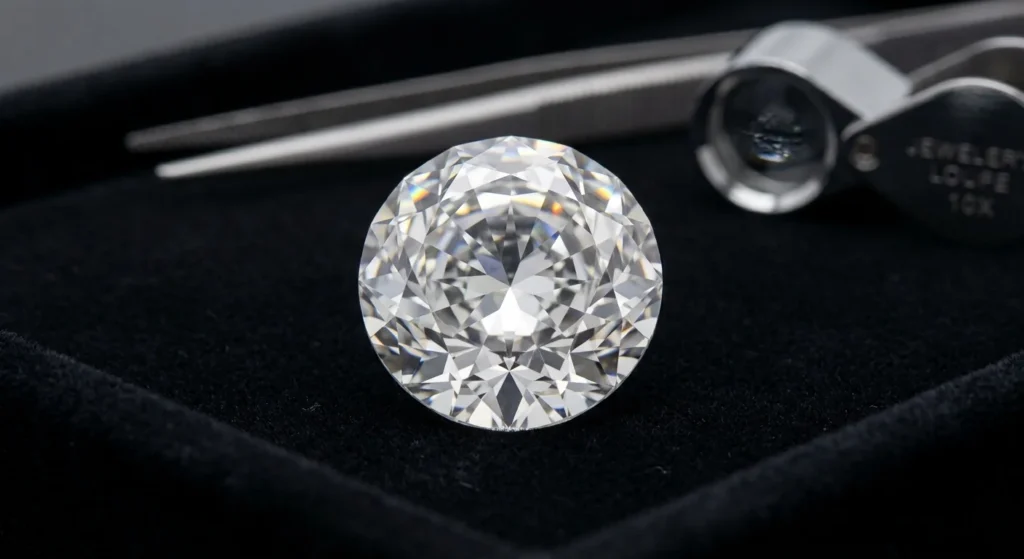
Most diamond cuts compete on proportion and light performance within a fairly standard facet count. The Portuguese cut takes a different approach entirely: it wins on sheer complexity. Where a standard round brilliant has 57 or 58 facets, a Portuguese cut typically carries 161 or more — in some cases exceeding 200. That’s not a minor variation on a familiar theme; it’s a fundamentally different faceting philosophy.
Where the Extra Facets Actually Go
The additional facets in a Portuguese cut aren’t scattered randomly — they’re arranged in multiple concentric rows extending across both the crown and the pavilion, typically described as three rows of facets on the crown and three more on the pavilion, layered above and below the girdle. Rather than the single tier of facets you’d find on a standard brilliant, light entering a Portuguese cut passes through several internal planes before it reflects back out — which is exactly why the sparkle reads as layered and kaleidoscope-like rather than the large, singular flashes of a modern brilliant cut.
Why It Needs a Deep Pavilion and Elevated Crown
The facet density only works with the right underlying structure: a notably deep pavilion and a raised crown, paired with a smaller table than you’d see on a standard brilliant. That depth is what gives light the room to travel through multiple internal planes before exiting — without it, the extra facets would have nowhere to catch and hold light, and the effect would collapse into visual noise rather than genuine sparkle.
Why Size Matters More in a Portuguese Cut Than Almost Any Other
This is the practical detail that trips up a lot of first-time buyers: a Portuguese cut genuinely needs surface area for its faceting pattern to read clearly. Most experts point to roughly 2 carats as the threshold where the effect starts to fully deliver — below that, the facet pattern can look cramped or muddled rather than showing the intended layered brilliance. If you’re sourcing a Portuguese cut for a smaller piece, it’s worth knowing upfront that the signature effect this cut is known for may not fully translate at a smaller size.
Where the Cut Actually Comes From
If you’re interested in how other historic diamond cuts achieve their distinctive character, compare the Old European and Old Mine cuts to understand how their facet patterns, proportions, and light performance differ from the Portuguese cut. What’s not in dispute is the design intent: this cut was built specifically to maximize brilliance in low, ambient light — the kind produced by candles and early gas lighting, well before consistent electric lighting existed. It’s also worth knowing the Portuguese cut isn’t exclusive to diamond — it’s a faceting style applied across colored gemstones too, particularly topaz and amethyst, where the deep pavilion helps intensify color saturation.
What This Means If You're Sourcing One
Given the facet density and cutting precision required, a Portuguese cut takes meaningfully more skilled labor than a standard round brilliant — expect that reflected in pricing more than in most other cuts, where carat weight typically dominates the price conversation. If you’re buying for resale, lead with the size guidance above rather than assuming any Portuguese cut stone will deliver the signature effect regardless of carat weight. For jewelers, designers, and professional buyers looking for specialty cuts, our Trade Program offers dedicated support for sourcing and purchasing stones suited to specific design, restoration, or resale requirements.
Explore our Specialty & Antique Cuts page for current Portuguese cut availability, or contact our team about a custom Portuguese cut order in your preferred carat range.