
Fancy Blue Lab Grown Diamonds Supplier
Factory Direct Fancy Blue Lab Grown Diamonds for B2B Buyers
- Full Shape Range
- Live Wholesale Pricing
- IGI Certified
- Bulk & Custom Sourcing
Fancy Blue Lab Grown Diamonds
Blue diamonds owe their color to trace boron incorporated into the crystal structure during formation — in natural stones, this makes them among the rarest gemstones on earth, since the precise geological conditions required are almost never met. In lab-grown production, that same boron-driven color mechanism creates a different kind of challenge: even, consistent boron distribution has to be controlled precisely during growth, and HPHT is the method most commonly used industry-wide to achieve reliable blue color. It’s a genuine technical skill, not a geological accident — but it’s still meaningfully harder to produce consistently more than yellow or white stock.
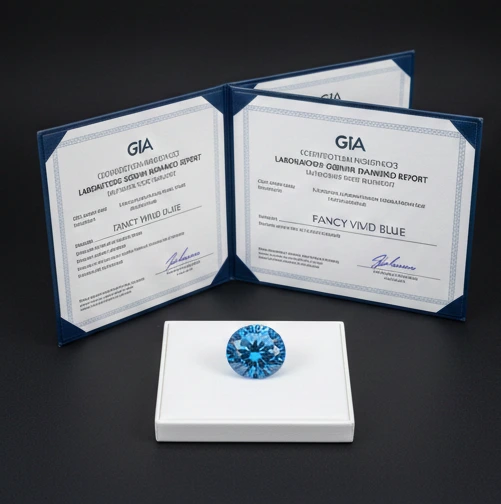
OCS Diamond sources fancy blue lab-grown diamonds — both CVD and HPHT — from our Surat facility, as GJEPC and Surat Diamond Bourse members since 2018. One thing worth knowing: post-growth color treatment (typically irradiation) is a documented practice elsewhere in the industry for blue-toned stones. Every blue stone we sell is natural to the crystal — color formed during growth, never post-growth treated — independently certified by IGI, and reviewed by our in-house gemology team before it’s listed. Certificate and video are linked on every stone, and for bulk or first-time orders, we’ll walk you through the actual stone on a live video call before you pay.
Current fancy blue inventory spans multiple intensity grades, from Fancy Light Blue through Fancy Vivid Blue, refreshed every 2 days.
Live Fancy Blue Lab Grown Diamonds Inventory
Browse our fancy blue lab grown diamonds inventory, featuring consistent color, excellent brilliance, and reliable supply. Wholesale pricing is available for approved retailers and bulk buyers.
Please log in to view the Diamond Price.
Available Specifications
| Specification | Details |
|---|---|
| Color | Fancy Blue (Fancy Light to Fancy Vivid) |
| Growth Type | CVD & HPHT — HPHT is the more commonly used method for blue industry-wide, though we source both |
| Carat Range | 1mm to 10 carats+ |
| Clarity | up to VS2 (occasionally SI1) |
| Certification | IGI |
“Every stone carries an IGI certificate. For buyers prioritizing resale confidence, we recommend VS2 clarity or higher — and every stone, regardless of grade, is internally reviewed by our in-house gemology team before it’s listed, not just certified and forgotten.”
What Determines Fancy Blue Pricing
Beyond the standard 4Cs, two factors move blue pricing more than any other fancy color: intensity grade and boron distribution evenness. A Fancy Vivid Blue with clean, even color throughout can be worth several times more than a Fancy Light Blue of the same carat weight — intensity is the dominant price driver here, more so than in yellow or even pink. Growth type matters too: HPHT-sourced blue, being the more established method for this color, sometimes carries a premium over CVD-sourced blue at equivalent grades, reflecting production consistency rather than any difference in the finished stone’s quality.
Shape also affects price more noticeably in blue than in white stock — round brilliant blue is genuinely harder to source than fancy shapes, since less rough is available to work with in this color to begin with.
Where Fancy Blue Diamonds Are Most Commonly Used
Blue is overwhelmingly a center-stone color — retailers rarely use it as an accent or pavé stone, since its value lies in visibility. Solitaire and halo settings dominate demand, with designers often pairing a Fancy Vivid Blue center stone against white diamond accents to maximize contrast. Smaller Fancy Light Blue stones occasionally appear in stud earrings or pendant settings for buyers wanting the color story at a lower price point.
Why Fancy Blue Diamonds Command Premium Value
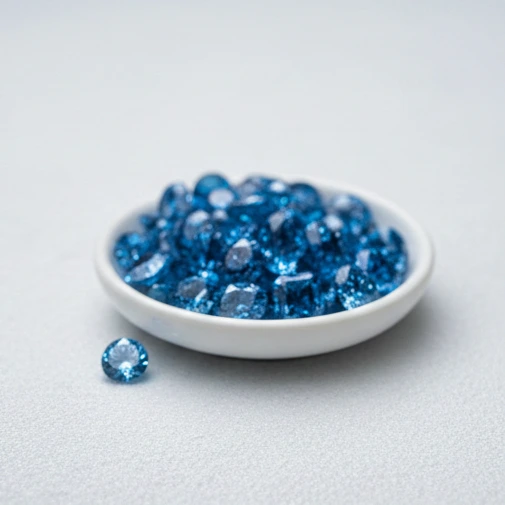
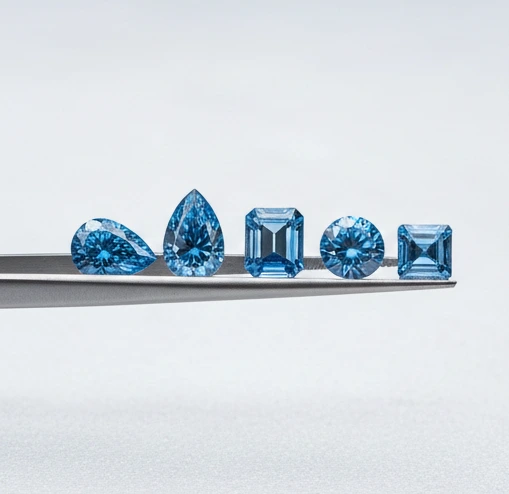
Blue’s premium comes from precision, not scarcity in the natural-diamond sense — reliably incorporating boron evenly through a stone during controlled growth is a harder technical target than yellow’s more straightforward nitrogen-driven process. That difficulty carries through to available volume: even in lab-grown production, evenly saturated blue stock is produced in smaller batches than white or yellow, which is reflected in price per carat.
For retailers, this makes fancy blue less of a volume category and more of a signature-piece opportunity. Intensity grade matters more than carat weight here — a smaller Fancy Vivid Blue will often outperform a larger Fancy Light Blue both in visual impact and resale value.
Frequently Asked Questions
Trace boron incorporated into the crystal structure during growth — the same mechanism responsible for color in natural blue diamonds, though achieving it consistently in a controlled lab environment requires precise process control.
No, and it’s worth being direct about that — natural blue diamonds are exceptionally rare due to the geological conditions required to form them, which is why they can sell for extraordinary sums at auction. Lab-grown blue is a different kind of scarcity: a genuine manufacturing challenge to produce consistently, but not comparable to natural blue’s geological rarity. This is exactly why lab-grown blue is accessible at a fraction of natural blue’s price for the same visual result.
Natural to the crystal — color forms during growth, never post-growth treated. This distinction matters because post-growth treatment (typically irradiation) is a documented practice elsewhere in the industry for blue-toned stones; we don’t use it.
Yes, though HPHT is the more commonly used method industry-wide for achieving reliable blue color. Check the live stock table for current availability by growth type.
Our standard minimum order is 5 carats. First-time buyers can request a smaller sample order before committing to bulk.