
CVD vs HPHT Diamonds: What B2B Buyers Need to Know
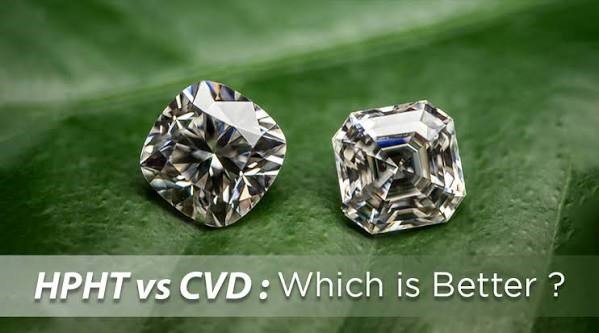
Every buyer sourcing lab-grown diamonds eventually asks the same question: does the growth method actually matter for what I’m buying? The honest answer is nuanced – both produce a genuine diamond, identical in hardness and crystal structure to a mined stone, but the two methods differ enough in practice that it’s worth understanding before you order at volume.
Two Different Ways to Grow the Same Thing
CVD (Chemical Vapor Deposition) builds a diamond from the bottom up inside a vacuum chamber — a carbon-rich gas is ionized into plasma, and carbon atoms deposit layer by layer onto a seed crystal over several weeks. HPHT (High Pressure, High Temperature) instead recreates the conditions under which diamond forms naturally deep in the earth — extreme pressure and heat applied to a seed surrounded by a carbon source and metal catalyst, crystallizing over days to weeks.
Neither method is “more real” than the other. Both produce carbon crystallized into genuine diamond structure — the difference is entirely in the growth mechanism, not the resulting material.
How Gemologists Actually Tell Them Apart
This matters for buyers because certification labs use specific, physical markers to identify growth methods, and understanding them explains some real practical differences:
HPHT stones often carry microscopic metallic inclusions from the metal catalyst used in growth — sometimes detectable as faint magnetism, a trait natural diamonds never show. CVD stones, grown without any metal catalyst, don’t have this — their inclusions tend to be non-metallic, more similar to what you’d find in a natural stone.
The two methods also grow into different rough crystal shapes — HPHT typically forms a cuboctahedron, CVD more of a cube-like shape — which creates different internal growth patterns still visible to lab equipment after cutting, including distinct fluorescence patterns (HPHT often shows a cross-shaped pattern; CVD, when it fluoresces, tends to show a striped pattern instead).
The Color Difference That Actually Affects Buying Decisions
Here’s the practical detail that matters most for sourcing: CVD-grown crystals frequently come out of the chamber with a brownish or grayish tint and often require post-growth treatment (commonly HPHT processing applied afterward) to reach a desirable white color grade. HPHT-grown stones, by contrast, are more commonly color-consistent as-grown, though they can carry a yellowish tint from nitrogen exposure during growth if not carefully controlled.
Neither of these tendencies is a defect — they’re simply different starting points that affect production approach. A reputable manufacturer manages both processes to deliver a consistent, correctly graded final stone regardless of method, which is exactly why the certificate — not the growth method alone — should be your primary reference for quality.
Does Growth Method Affect Resale or Value?
Both CVD and HPHT diamonds carry identical certification standards and 4Cs grading — a well-graded stone from either method holds the same documented quality. Where buyers sometimes see a practical difference is production consistency at specific size and clarity targets: HPHT has historically been associated with faster growth and efficient production of smaller, fancy-colored stones, while CVD has become the more common route for larger, high-clarity white stock requiring precise, controllable growth conditions. This is a general industry pattern, not an absolute rule — actual availability depends on your specific supplier’s production setup.
Our Practical Recommendation
Rather than choosing a growth method first and then searching for matching stock, tell us your target carat, color, and clarity — we stock both CVD and HPHT and will point you to whichever current inventory actually fits your specification, rather than steering you toward one method by default.
Browse our White CVD and White HPHT pages to compare current stock side by side, or register for trade access to discuss your specific target spec with our team.